
Cemented Carbide Facts
Cemented carbide is one of the strongest metals known to human beings. It is denser than lead and harder than steel. Cemented Carbide's unique combination of strength, hardness and toughness satisfies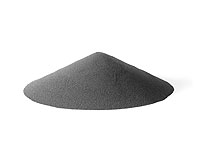 the most demanding applications.
An important feature of the cemented carbide is the potential to vary its composition so that the resulting physical and chemical properties ensure maximum resistance to wear, deformation, fracture, corrosion, and oxidation. Besides, a wide variety of shapes and sizes that can be produced using modern powder metallurgical processing offers tremendous scope to design cost-effective solutions to many of the problems of component wear and failure encountered in both the engineering and domestic environment.
In general, the super hard materials all suffer from lower toughness and poor resistance to sudden fracture, the cemented carbide have a unique combination of high hardness and good toughness within a wide range and thus constitute the most versatile hard materials group for engineering and tooling applications.
Chinatungsten Online develops cemented carbide technology to meet our present and future customer needs. Chinatungsten Online is dedicated to advancing Cemented Carbide technology in order to meet our customers' present and future needs. Every step in the manufacture of a Cemented Carbide component – from powder production to finishing – is crucial to ensure optimum performance. At Chinatungsten Online, we have full control of each processing step and in developing proprietary production processes that further improve our technological capabilities. We are trying our best to develop new products and new grades of Cemented Carbide that enhance our customers' operations through superior performance and reduced costs.The Cemented Carbides are a range of composite materials, which consist of hard carbide particles bonded together by a metallic binder.
The proportion of carbide phase is generally between 70-97% of the total weight of the composite and its grain size averages between 0.4 and 10 μm.
Cemented carbide (WC), the hard phase, together with cobalt (Co), the binder phase, forms the basic Cemented Carbide structure from which other types of Cemented Carbide have been developed. In addition to the straight tungsten carbide – cobalt compositions – Cemented Carbide may contain varying proportions of titanium carbide (TiC), tantalum carbide (TaC) and niobium carbide (NbC). These carbides are mutually soluble and can also dissolve a high proportion of tungsten carbide. Also, Cemented Carbides are produced which have the cobalt binder phase alloyed with, or completely replaced by, other metals such as iron (Fe), chromium (Cr), nickel (Ni), molybdenum (Mo), or alloys of these elements.
There are three individual phases which make up Cemented Carbide. In metallurgical terms, the tungsten carbide phase (WC) is referred to as the a-phase (alpha), the binder phase (i.e. Co, Ni etc.) as the b-phase (beta), and any other single or combination of carbide phases (TiC, Ta/NbC etc) as the g-phase (gamma). Other than for metal cutting applications, there is no internationally accepted classification of Cemented Carbides.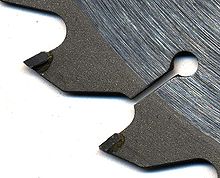
Cemented carbide is a synthetic compound created by placing a tungsten-based substance with a carbon-based organic compound such as methane or methanol. When done under the proper conditions, the result of this chemical reaction is a fine black powder, known as cemented carbide, a remarkable end-product that has many industrial and aesthetic uses.
1. Tungsten
Expressed by the symbol "W," tungsten is a metallic element that is not found free in nature, but occurs in mineral ores such as wolframite or scheelite. When isolated to its pure form, tungsten has many properties, such as a high tensile strength, low non-toxicity and a high melting point. As a result, tungsten is used as metal alloy in manufacturing steel and other metal alloys. It is also a major ingredient in cemented carbide.
2. Carbon
Carbon is the other raw material of cemented carbide. This common element is a major part of the biological world, where it forms many substances commonly found in both plants and animals. In the creation of cemented carbide, methane or methanol often provides the source of carbon. In general, carbon is one of the most common elements, and in its metallic forms can also be the most versatile. This property reveals itself quite clearly when comparing two carbon minerals: graphite and diamonds.
3. Chemical Formulas
Cemented carbide has two chemical formulas, WC and W2C. In the first example, tungsten and carbon combine in equal proportions to form cemented carbide, sometimes referred to as just carbide. With the other formula, W2C, the ratio of tungsten to carbon is 2 to 1. With both these products, the final result is determined by the initial choice of compounds used to begin the chemical reaction.





 sales@chinatungsten.com
 閩公網安備 35020602000140號