
Tungsten Heavy Metal Heater
Tungsten heavy metal heater is made of tungsten wire. It has features of high melting point and high corrosion resistance. It is mainly applied for vacuum metalizing, such as aluminizing scope, chrome scope, mirrors, plastics and heater elements for decoration articles
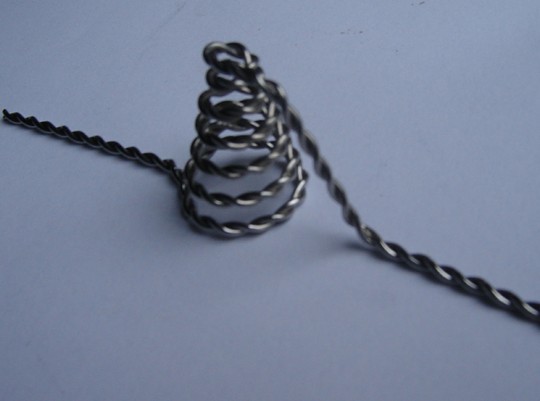
.The principle of heating element
Heating elements commonly burn out over time. For this reason, they are often designed in an accessible way so that it is easy to pull out a faulty heat element and replace it with a new one. Since replacements can sometimes be expensive, it is advisable to conduct some tests to confirm that the heating element is the problem; for example, heat may not be generated because no electricity is reaching the element, which may be because a fuse has blown, because there is a problem with the wiring, or for other reasons.
Heating elements are capable of getting quite hot. They are made from metal alloys which are well suited to use as heating elements in part because they can withstand multiple heating and cooling cycles. In environments which get wet, the heating element may be hidden behind a barrier for safety. The barrier will disperse the heat without allowing water to come into direct contact with the element.
The principle of water heater
Water heating is a thermodynamic process using an energy source to heat water above its initial temperature. Typical domestic uses of hot water are for cooking, cleaning, bathing, and space heating. In industry, both hot water and water heated to steam have many uses.
Domestically, water is traditionally heated in vessels known as water heaters, kettles, cauldrons, pots, or coppers. These metal vessels heat a batch of water but do not produce a continual supply of heated water at a preset temperature. The temperature will vary based on the consumption rate of hot water, use more and the water becomes cooler.
Appliances for providing a more-or-less constant supply of hot water are variously known as water heaters, boilers, heat exchangers, calorifiers, or geysers depending on whether they are heating potable or non-potable water, in domestic or industrial use, their energy source, and in which part of the world they are found. In domestic installations, potable water heated for uses other than space heating is sometimes known as domestic hot water.
The principle of electric heating
Electric heating is any process in which electrical energy is converted to heat. Common applications include heating of buildings, cooking, and industrial processes.
An electric heater is an electrical appliance that converts electrical energy into heat. The heating element inside every electric heater is simply an electrical resistor, and works on the principle of Joule heating: an electric current through a resistor converts electrical energy into heat energy.





 sales@chinatungsten.com
 閩公網(wǎng)安備 35020602000140號